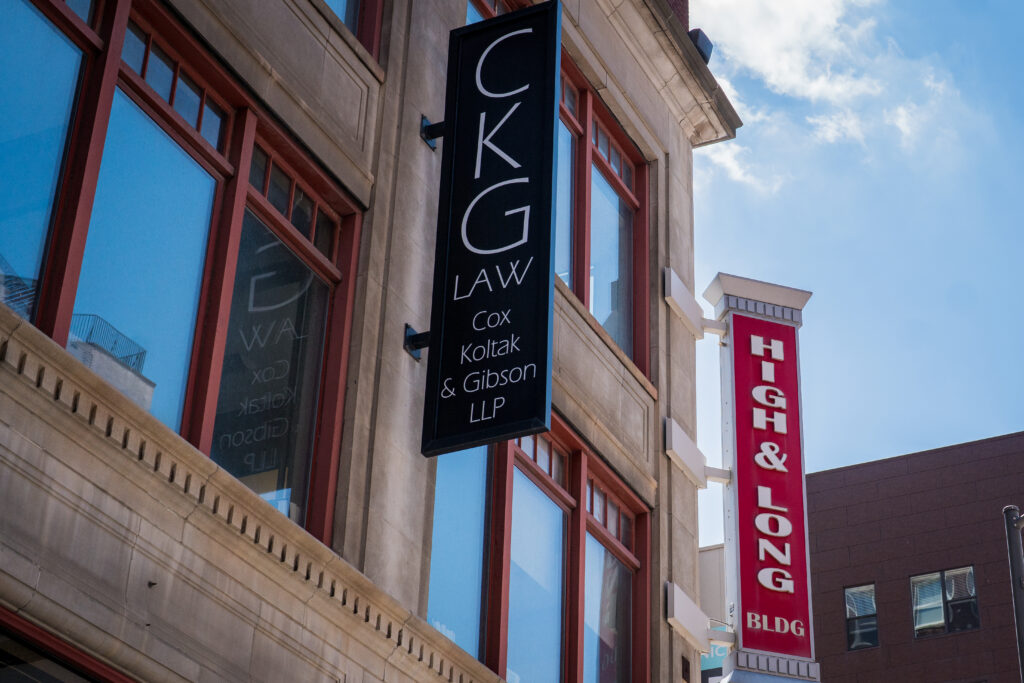
Based in downtown Columbus, Cox, Koltak & Gibson helps injured workers across Ohio with denied claims, lost-wage benefits, medical treatment and settlements.
Help with your work injury claim, from our Columbus office
A work injury can leave you dealing with medical appointments, missed paychecks and unfamiliar paperwork at the same time. Our attorneys help you understand the issues in your claim and what to do next—whether you are filing for the first time, challenging a denial or considering a settlement.
We represent injured workers before the Ohio Bureau of Workers’ Compensation and the Industrial Commission of Ohio. Bring your claim number, any recent orders, medical restrictions and questions to a free consultation. We can review where your claim stands and explain your options.
Meet your Columbus workers’ compensation attorneys
Our firm has served injured Ohio workers since 1972. Today, Peter Gibson and Benjamin Churchill help clients address claim disputes, benefit applications and hearings.
Peter Gibson
Managing Partner
Admitted to the Ohio Bar in 1992, Pete represents injured workers before the BWC and the Industrial Commission. He earned his J.D. from Capital University Law School in 1991 and has represented injured workers in Ohio trial and appellate courts.
Admitted to the Ohio Bar in 2008, Ben represents injured workers before the BWC, the Industrial Commission and Ohio courts. He earned his J.D. from Capital University Law School in 2008 and joined Cox, Koltak & Gibson in 2021.
Ohio’s workers’ compensation system can provide medical benefits and compensation for qualifying work injuries and occupational diseases. You generally do not have to prove that your employer was negligent, but you still need to establish that the injury or condition qualifies under Ohio law.
The BWC administers state-fund claims. Approved self-insured employers administer and pay their own claims, while the Industrial Commission resolves disputed issues. The conditions allowed in your claim, medical evidence and the requirements for each benefit affect what you may receive.
Not every claim qualifies for every benefit. These guides explain the evidence, applications and deadlines that may matter in your case.
Medical treatment
A claim may cover reasonable and necessary treatment for its allowed conditions. Disputes can involve the medical condition, the requested care or authorization.
TTD may replace part of your wages when an allowed condition prevents you from performing your former position of employment. Medical support and other eligibility rules apply.
PPD may compensate for lasting impairment from an allowed injury or condition. Percentage awards have medical-evaluation and application requirements; scheduled losses follow separate rules.
Wage-loss benefits may help when injury-related restrictions reduce your earnings or prevent you from finding suitable work. Wage records and, when required, job-search documentation matter.
A settlement can resolve all or part of a claim. Which compensation and medical benefits end depends on the agreement, so future treatment needs deserve careful consideration.
Eligible dependents may receive benefits when a work injury or occupational disease causes a worker’s death. Dependency, medical evidence and filing requirements affect the claim.
Denied claim? Start with the order and your deadline.
A denial can involve disputed facts, medical evidence or whether a condition is related to work. We review the reason given, identify the evidence needed and help clients prepare appeals and hearings.
Many BWC and Industrial Commission orders carry a 14-day appeal period after receipt of the order—not simply the date printed on it. Different decisions can have different procedures and deadlines. Keep the order and evidence of when you received it, and seek help promptly.
If a health condition keeps you from working, our firm can discuss Social Security Disability applications and appeals. This program has requirements separate from workers’ compensation.
Some accidents also raise a separate personal injury claim, including a potential claim against a responsible third party. We can help you understand whether another claim should be considered.
Questions about working with a Columbus workers’ comp lawyer
Do I need a lawyer to file an Ohio workers’ comp claim?
You can file a claim without an attorney. Legal help may be useful if your claim is denied, benefits stop, treatment is disputed or you are considering a settlement. A free consultation can help you understand the issue and decide whether you want representation.
Get appropriate medical care, report the injury promptly and describe how it happened. Keep copies of medical restrictions, incident reports and claim paperwork. Reporting an injury to a supervisor is not necessarily the same as filing a claim. Confirm that the claim has been filed and that you have a claim number.
Can I receive benefits if I cannot return to my regular job?
Possibly. Temporary total disability may apply when an allowed condition prevents your former job, subject to medical evidence and other eligibility rules. Wage-loss benefits may apply in other circumstances. Being unable to perform your regular job does not automatically mean you must be unable to do every kind of work.
No. Ohio law permits settlements of all or part of a claim. The agreement determines which benefits are resolved and which, if any, remain available. Before signing, understand whether future medical care is included in the settlement and how you would pay for treatment afterward.
Bring your claim number if you have one, recent BWC or Industrial Commission orders, medical reports and work restrictions, and information about missed work or reduced earnings. If you received a denial, include when you received it. You can still contact us if you do not have every document.
Yes. Our office is in downtown Columbus, and we represent injured workers throughout Ohio. Contact us to discuss your claim, where you are located and the next steps. Any hearing notice will provide the location or participation instructions for that proceeding.
Workers’ compensation informationReviewed by Peter Gibson
Peter Gibson is the managing partner of Cox, Koltak & Gibson. Admitted to the Ohio Bar in 1992, he represents injured workers before the Ohio BWC and Industrial Commission. J.D., Capital University Law School, 1991.
Cox, Koltak & Gibson serves injured workers in Columbus, Franklin County and communities across Ohio. Call to discuss your claim or arrange a consultation.