

Columbus Workers' Compensation Attorneys — Fighting for Injured Workers Since 1972
When you've been hurt on the job, the last thing you should worry about is the bureaucracy. Our attorneys handle the BWC so you can focus on recovery.

Reviewed by Peter Gibson
Managing Partner
Peter Gibson is the managing partner of Cox, Koltak & Gibson. Admitted to the Ohio Bar in 1992, he represents injured workers before the Ohio Bureau of Workers’ Compensation and the Ohio Industrial Commission. He earned his J.D. from Capital University Law School in 1991.
Read Peter Gibson’s biographyIf you were injured at work in Columbus or elsewhere in Ohio, the immediate questions are practical: how will treatment be paid, what happens to missed wages and what records does the claim need? Cox, Koltak & Gibson represents injured workers in BWC claims, Industrial Commission proceedings and related benefit disputes. Our downtown Columbus office offers a free consultation to review your records, identify the next step and explain proposed representation, fees and costs.
How to File a Workers' Comp Claim in Ohio
Start with medical care, accurate reporting and confirmation that the claim was filed. Keep copies throughout the process.
- 01
Get appropriate medical care and report the injury
Seek urgent care when needed and tell the provider how the injury happened at work. Notify your employer promptly, keep a written record and identify the affected body parts. Describe the events accurately, including symptoms or earlier conditions relevant to the medical history.
- 02
Complete or confirm the First Report of Injury
The FROI starts the claim. The worker, employer, medical provider or representative can submit it. Confirm who filed, what information was included and the assigned claim number. For a self-insured employer, follow the applicable claim-reporting process with the employer.
- 03
Keep the records and check the claim status
Save the report, medical records, filing confirmation and employer communications. Check which diagnoses have been requested and which have been allowed. Respond to requests for information and keep your mailing and contact information current.
- 04
Read the decision and protect any appeal deadline
For ordinary state-fund claims, ORC 4123.511 generally requires an order within 28 days after the BWC sends its notice of receipt, subject to the statute’s exceptions. If you disagree with an order, record when you received it and follow the applicable appeal instructions promptly.
Use the Ohio BWC’s official FROI form and submission instructions. The ordinary claim-decision and administrative-appeal rules appear in ORC 4123.511. The employer’s certification decision does not by itself determine the final outcome of a disputed claim.
For help with filing, claim administration and disputed conditions, see our Ohio BWC attorney guide.
Who qualifies for workers’ compensation in Ohio?
Most Ohio employees can seek workers’ compensation for a qualifying injury or occupational disease connected to their employment. Coverage does not depend simply on whether the employee works full time. The facts of the employment relationship, how the injury occurred and the medical evidence all matter.
Ohio workers’ compensation is generally a no-fault system. You do not ordinarily have to prove that your employer was negligent or that you were entirely free of fault. Specific exclusions and requirements still apply; ORC 4123.54 describes entitlement and exclusions, including purposely self-inflicted injuries and specified substance-related circumstances.
Independent-contractor status can be disputed, so a label or tax form alone should not end the inquiry. A claim may also cover medical care even when the injury causes no missed work. If you are unsure about your situation, bring the job details and injury records for a review.
Why filing an Ohio workers’ comp claim matters
A properly documented claim creates a way to request benefits supported by the allowed conditions. Depending on the facts, that may include authorized medical care, temporary wage replacement, compensation for permanent impairment or wage loss after a return to lower-paying work. Those benefits have separate requirements; filing does not automatically approve every treatment or payment.
Report what happened, keep the first medical records and confirm the claim number. Do not assume that an employer’s promise to pay a bill establishes all the protections or allowances you may need later. Likewise, a workers’ compensation filing is not a guarantee of job security. Read our guide to Ohio workers’ comp retaliation and job protection if you are concerned about an employment action.
Benefits Available Under Ohio Workers' Comp
An allowed claim is not one benefit. It is a set of separate benefits, each with its own application, its own proof, and its own way of being denied.
Medical benefits
An allowed claim may pay for reasonable, necessary treatment connected to its allowed conditions, subject to the applicable authorization process. That can include doctor visits, surgery, therapy, prescriptions and equipment. Confirm provider and treatment requirements, keep authorization records and identify the specific procedure for challenging a refusal.
Temporary Total Disability (TTD)
Temporary total disability can replace part of lost earnings when the allowed conditions prevent a return to the former position of employment. Eligibility, medical certification, wage calculations and statutory payment limits matter. Returning to work, suitable work availability, maximum medical improvement or another statutory condition may affect payments. The applicable order and procedure must be checked before assuming that a particular medical opinion ends the benefit.
Permanent Partial Disability (PPD / C-92 awards)
Percentage permanent partial disability compensates qualifying permanent impairment from the allowed conditions. A C-92 application is subject to statutory eligibility and timing requirements; medical improvement alone does not determine when it can be filed. The percentage is decided through the BWC process using medical evidence and can be disputed. A percentage award is different from a negotiated claim settlement.
Permanent Total Disability (PTD)
Permanent total disability addresses inability to perform sustained remunerative employment due to the allowed conditions. Medical evidence is central; relevant vocational factors may also be considered. Compensation may continue while permanent total disability persists, subject to the governing rules. Being unable to return to one former job does not by itself establish PTD.
Wage loss benefits (working and non-working)
Qualifying wage loss can address reduced earnings after a return to different employment or an inability to obtain suitable work within restrictions. Medical and wage evidence are required. A documented search for comparably paying work may also be required, including in working wage-loss claims unless an exception or authorized excuse applies. Duration and calculation rules are explained in the wage-loss guide.
VSSR — violation of a specific safety requirement
A violation of an applicable specific safety requirement that causes an injury, occupational disease or death may support an additional award. The exact requirement, its applicability and causation must be established. VSSR has its own filing deadline and procedure, so review the safety issue separately from the ordinary claim and before settling it.
Death benefits
Eligible dependents may receive compensation when an injury or occupational disease causes a worker’s death. The medical connection, dependency and filing requirements must be established. Funeral expenses and ongoing dependent benefits have statutory rules and limits. Our death-benefits guide explains the records families can gather and the questions to discuss.
Why Ohio Claims Get Denied
A denial can concern the entire claim, a diagnosis or a particular benefit. These are examples of issues to identify in the written decision.
Filing or appeal timing
The agency may dispute whether the required filing was timely. Keep submission confirmations and the order’s delivery records so the applicable deadline and any relevant provisions can be checked.
Causation disputes
The dispute may concern whether the incident happened at work or whether it caused the diagnosis. Incident records and a medical opinion addressing that connection may be needed.
Pre-existing conditions
Earlier symptoms or degenerative findings can raise questions about the claimed work-related change. Prior and current records, objective evidence and the physician’s explanation should be considered together.
Conflicting medical opinions
An examination report may disagree with the treating physician about causation, restrictions or impairment. Review the actual findings and the evidence needed to address them.
Employment or claim-scope disputes
The parties may disagree about employment status, an additional condition or a particular benefit. The response should address the exact issue identified in the decision.
Preserve the filing deadline while you collect evidence addressing the dispute. Do not wait for a new medical report before checking whether an appeal must be filed.
Appealing a Denied Claim
The ordinary administrative sequence is outlined below. Specialized proceedings may use different steps, and a court appeal is available only for certain issues.
- 1
BWC order
Read the written decision and identify the claim, conditions or benefits decided, its reasons and the appeal instructions.
- 2
District Hearing Officer
For the usual administrative appeal, a District Hearing Officer considers the dispute. The hearing notice identifies the issues and attendance format.
- 3
Staff Hearing Officer
Either side can appeal an ordinary district order within the applicable period. A Staff Hearing Officer then considers the evidence and issues.
- 4
Industrial Commission
A further administrative appeal may be requested, but Commission review is discretionary.
- 5
Possible court proceeding
Some final right-to-participate decisions may be appealed to a court of common pleas. Other disputes use different remedies, with separate requirements and deadlines.
The ordinary BWC and Industrial Commission appeal stages generally allow 14 days after receipt under ORC 4123.511. Specialized proceedings can differ; for example, a tentative percentage permanent partial order has a separate objection procedure. Keep the complete order and its delivery information.
See our denied-claim guide for first steps and our Industrial Commission hearing guide for preparation and attendance information. Some final right-to-participate decisions may be appealed under ORC 4123.512; extent-of-disability decisions generally do not use that route.
Ohio claim deadlines: check the type of claim
For injury or death claims, ORC 4123.84 generally requires the specified notice within one year after the injury or death, with statutory provisions and exceptions that can affect a particular claim. Occupational-disease claims follow the separate timing rules in ORC 4123.85, involving disability, diagnosis and death as applicable.
Appealing a decision is a separate deadline. The ordinary administrative appeal stages generally allow 14 days after receipt of the relevant order; specialized decisions can differ. Keep the envelope or electronic notice and bring the actual order for review. If you think a deadline has passed, have the facts checked promptly rather than relying on a general summary.
Workers’ comp settlements in Ohio
A settlement resolves the claims or benefits identified in the agreement. Some resolve the entire claim, while others resolve specified portions. The effect on future medical care and compensation depends on the terms and the approval process under ORC 4123.65.
Before accepting an offer, compare the proposed payment with the treatment and benefits being resolved. Review any Medicare, Social Security or VSSR issues that may affect the decision. Our Ohio workers’ comp settlements and PPD chart separates a negotiated settlement from a permanent partial award and explains what to bring to an offer review.
Not every claim needs representation. Our guide to when to hire a workers’ comp attorney in Ohio explains the circumstances in which a consultation may help and the questions to ask about fees and case costs.
Answers to common Ohio work-injury questions
Explore these guides for more detail on filing, payments and the records that matter in different work settings.
Filing and benefits
Why Hire Cox, Koltak & Gibson
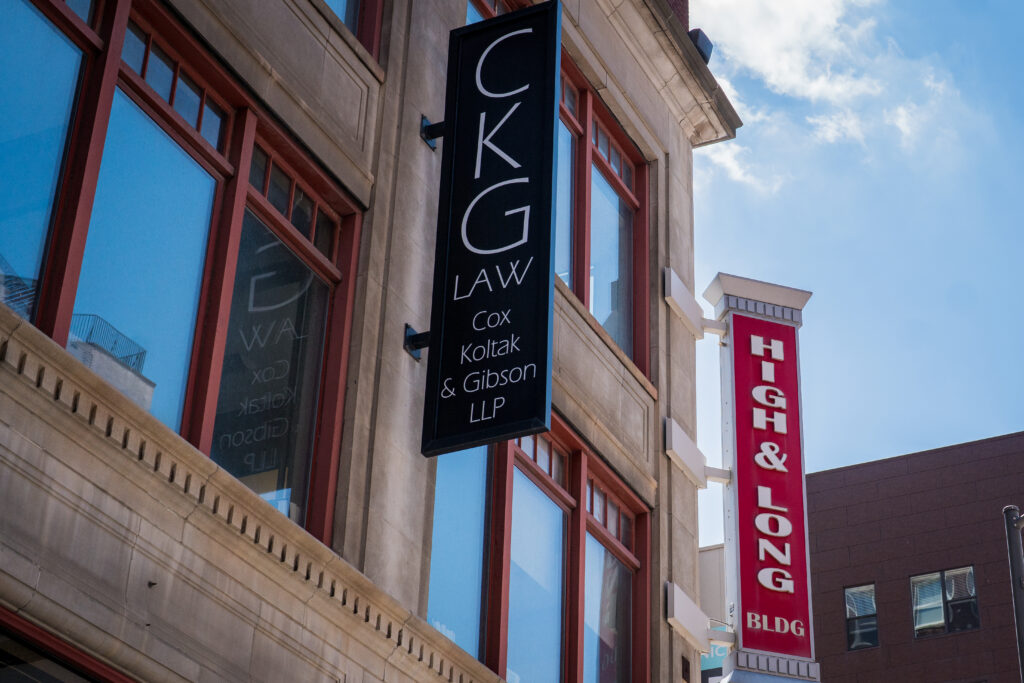
We opened in 1972 and we have worked out of downtown Columbus ever since. In fifty years the firm has never taken the other side of one of these cases. We do not represent employers or insurers, and we do not spread ourselves across a dozen practice areas. Injured workers are the practice.
Peter Gibson, our managing partner, has practiced for more than thirty-one years. He was admitted to the Ohio Bar in 1992 after earning his J.D. at Capital University Law School, and he appears before the BWC, the Industrial Commission, the courts of common pleas, the Court of Appeals, and the Supreme Court of Ohio. Benjamin Churchill has fifteen years of experience handling workers' compensation claims and related litigation across the state.
There is no fee unless we win, and no charge to find out where you stand. When you call, you talk to an attorney about your claim — not a call center, not an intake script. That is how it has worked here since 1972 and we have not found a reason to change it.
Industry Recognized





Frequently Asked Questions
Put an Experienced Advocate in Your Corner
The BWC has attorneys. Your employer has attorneys. You deserve the same. Visit us at 5 E Long St #200 in downtown Columbus, or call (614) 221-7381 — the consultation is free and there is no fee unless we win.